

Replastering After Damp Proofing

Replastering after damp proofing means stripping away the old, salt-damaged plaster and replacing it with a specialist salt-resistant render that works alongside your new damp proof course. It’s a step that’s easy to overlook, but without it, salts left behind in the original plaster keep pulling moisture from the air, so your walls can still feel damp even after the damp-proof course is doing its job.

In short: Replastering after damp proofing replaces salt-contaminated plaster with a specialist waterproof render so your walls can dry fully after a new damp proof course. Kenwood carries out all work in-house to a fixed price with no hidden charges. Free surveys are available across most areas of London.`

Kenwood is a London-based property preservation specialist with decades of experience in damp proof replastering. Our dedicated ​​in-house team, with extensive expertise, carries out every stage of the work, from plaster removal to final finishing, using our own factory-produced waterproof rendering system. This ensures consistent quality and reliable results for your professional damp proofing, completing the job that the damp proof course starts below the surface.

Why Replaster After a Damp Proof Course?

Rising damp doesn’t just bring moisture into your walls, it also carries soluble salts up from the ground into the brickwork and plaster. These salts are hygroscopic, meaning that they pull moisture directly from the air around them. Even after a new damp-proof course prevents moisture from rising through the wall, contaminated plaster will continue to feel damp and may show staining, blown surfaces, or decorative failure.

Replacing the affected plaster with a purpose-made waterproof plaster for damp walls does two things. It removes the salt-contaminated material entirely and provides a new render coat that resists further salt penetration, allowing the wall to dry fully and stay dry.

If the contaminated plaster is left in place after damp proofing, it can cause ongoing issues, such as damp patches and peeling paint. Proper replastering reassures homeowners that their walls will remain dry in the long term, completing the damp proofing process effectively.

Specialist Replastering vs Standard Plaster

Standard plaster and DIY replastering are not suitable for walls affected by rising damp. Here is why the two approaches differ and why specialist replastering matters.

Standard plaster or DIY skim: neither is designed to cope with salt-contaminated masonry. Ordinary gypsum plaster allows residual salts to pass straight through, and those salts continue to pull moisture from the air once they reach the new surface. The result is the same damp patches, blown plaster, staining, and peeling decoration you had before, often within just a few weeks. Your damp proof course may be working exactly as it should, but the wrong plaster above it cancels out its benefits.

Specialist salt-resistant plaster, such as Kenwood’s Premix Waterproof Rendering System, is formulated to block the passage of salts. It creates a durable barrier that allows your walls to dry fully and stay dry, giving you confidence in the longevity of your damp proofing investment.

Choosing specialist replastering protects the investment you have already made in damp proofing. Without it, an otherwise effective damp proof course can appear to have failed when the real issue is the plaster above it.

How Kenwood Carries Out Damp Proof Replastering

Step 1: Survey and Assessment

A Kenwood surveyor will inspect the affected walls, identifies the extent of salt contamination, and then confirm which areas require replastering. You’ll receive a written report and a fixed-price quotation before any work begins.

Step 2: Removal of Contaminated Plaster

The existing plaster is stripped back to bare masonry across all affected areas. This removes the hygroscopic salts, the moisture-attracting mineral deposits left behind by rising damp, that would otherwise continue to draw moisture into the wall.

Step 3: Application of Salt-Resistant Render

Kenwood’s Premix Waterproof Rendering System is applied to the prepared masonry. This is a factory-produced, computer-batched blend of dried sands, cement, lime, waterproofing additives, and polypropylene fibres that reduce shrinkage cracking. It is weighed and mixed under controlled conditions rather than hand-batched on-site, ensuring every application is consistent and reliable.

Step 4: Finishing and Drying

The render is finished to a smooth, decoration-ready surface. Drying times vary depending on wall thickness, ventilation, and ambient conditions, but Kenwood will advise on expected timescales and when redecoration can begin.

All work is carried out by Kenwood’s own in-house operatives, ensuring quality control from start to finish.


Need replastering after a damp proof course? Kenwood provides fixed-price specialist replastering across London with no hidden charges. Speak to our team to arrange a survey and receive a no-obligation quotation. Book a survey online or call our team.

Replastering Cost and Fixed Pricing

Kenwood provides a fixed price for all damp-proof replastering work. Once a quotation is agreed, the price remains the same regardless of what is found once the plaster is removed, including plaster that turns out to be thicker than expected.

This is an important distinction. Most companies quote on the assumption that existing plaster does not exceed a certain thickness, typically 18 to 25 mm. If the plaster is found to be thicker after removal, an additional charge is applied. Kenwood does not operate this way. The price quoted is the price you pay.

Your quotation is provided following the survey and covers all labour, materials, and finishing. There are no staged add-ons or post-start price increases.

Why Choose Kenwood for Replastering After Damp Proofing

Kenwood is a specialist in property preservation, offering services across damp proofing, timber treatment, and replastering. Our replastering service is designed to work as part of a complete damp proof course installation, ensuring every stage of the treatment is effective.

Where damp proofing and replastering are needed together, as they usually are, Kenwood can assess and deliver the full programme as a single project rather than splitting the work between separate contractors.

  • Factory-produced rendering system: Kenwood’s Premix Waterproof Rendering System is computer-batched under rigorous quality control, removing the inconsistency of hand-mixed site renders
  • Published technical authority: Kenwood has published specialist guidance used by Chartered Building Surveyors, Valuers, and Home Inspectors
  • Fixed pricing with no extras: The quoted price includes all plastering work, regardless of wall thickness or plaster depth
  • Own in-house team: Every stage of work is completed by Kenwood’s trained operatives, not subcontractors.
  • Full property preservation capability: Where replastering is needed alongside rising damp treatment, structural waterproofing, or timber treatment, Kenwood can assess and treat the whole property in a single programme of work
  • Free surveys across most of London: No charge for inspection, report, or quotation in most areas

Replastering After Damp Proofing FAQs

Does every wall need replastering after a damp proof course is installed?

No, not necessarily. Only walls where the existing plaster is contaminated with hygroscopic salts need to be replaced. A Kenwood surveyor will identify exactly which areas require damp proof replastering during the initial inspection, so you are not paying for unnecessary work.

What happens if you don’t replaster after damp proofing?

The damp proof course will stop moisture rising through the masonry, but the salts already in the old plaster will continue to absorb moisture from the air. This means walls can still feel damp, show staining, and cause paint and wallpaper to fail, even though the damp-proof course itself is working. Replastering removes the contaminated material and allows the wall to dry fully.

How do I know if my plaster has salt damage?

The following are all common signs: white crystalline deposits on the wall surface, damp patches that persist after damp proofing, plaster that feels soft or crumbly, blown or bubbling plaster, and paint or wallpaper that continues to peel. A Kenwood surveyor can confirm whether the damage is caused by hygroscopic salts during a free inspection.

Can I use normal plaster on a damp wall instead of salt-resistant plaster?

No. Standard gypsum plaster does not resist salt migration. If ordinary plaster is applied to a wall affected by rising damp, residual salts pass through and cause the same problems: damp patches, blown plaster, and decorative failure. A salt-resistant plaster is specifically formulated to block this process and allow the wall to dry properly.

What is salt-resistant plaster?

Salt-resistant plaster, also known as salt-retardant render, is a specialist plastering material designed to prevent hygroscopic salts in masonry from migrating to the wall surface. It forms a key part of any replastering after a damp proofing programme, ensuring the new plaster does not become re-contaminated.

How long does replastering after damp proofing take?

Most residential replastering jobs are completed within one to two days. Timescales depend on the number of walls being treated and the extent of plaster removal required. Drying times before redecoration vary depending on wall thickness and ventilation, and Kenwood will advise on when you can begin decorating.

How much does replastering after damp proofing cost?

Costs depend on the area to be replastered and the condition of the existing walls. Kenwood provides a fixed-price quotation following a free survey, and the quoted price does not change even if the existing plaster is thicker than expected. This protects you from the additional charges that many other companies apply after work has started.

Is waterproof plaster for damp walls different from tanking plaster?

Yes, they are different products for different situations.

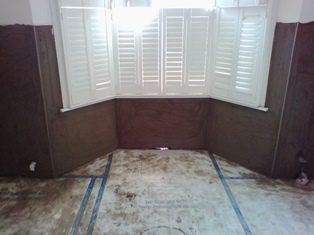
Unplastered Wall

Waterproof plaster for damp walls, such as Kenwood’s Premix Waterproof Rendering System, is designed for use above a damp proof course to resist salt passage and allow walls to dry. Tanking plaster is used in structural waterproofing or basement conversion projects w

here water pressure from outside the wall needs to be resisted. Your Kenwood surveyor will confirm which system is best suited to your property.

H2: Arrange Your Replastering Survey Today

If your property has had a damp proof course installed, or you are planning damp proofing work and want to understand what replastering will be involved, contact Kenwood to arrange a free survey across most areas of London.

Completed Our team will evaluate the condition of your walls, identify any salt contamination, and provide a fixed-price quo

tation with no obligation.

Book a survey online or call our team to discuss your requirements. We are here to help.


    Call me back

    Your Name *

    Phone number

    We take your data seriously and do not sell data to third parties. We will only contact you in regard to our services in accordance with our privacy policy.

    This site is protected by reCAPTCHA and the Google Privacy Policy and Terms of Service apply.

    Why choose Kenwood

    1

    Experienced 20,000

    Properties attended each year.

    2

    Established 30 Years

    We have been in business

    3

    Expert Skilled

    Technicians and Surveyors

    4

    Guarantees 20 Years

    Damp proofing guarantees

    Our customers rate us

    Trust Kenwood Plc

    We are Full members of the BWPDA (British Wood Preserving & Damp Proofing Association), PCA (Property Care Association), CHAS and the Guarantee Protection Trust.

    Request Callback chevron_right


    Susie Sinden

    Susie Sinden

    Marketing Executive | Leading Damp Proofing & Timber Treatment contractors.

    Susie Sinden is a skilled Marketing Executive who provides strategic marketing services to KENWOOD PLC. With a strong focus on brand development, campaign management, and customer engagement, Susie plays a key role in driving the company’s marketing initiatives and supporting its growth in competitive markets. Her expertise ensures that KENWOOD PLC consistently communicates its value to the right audiences with impact and clarity.


    Chloe Kinch

    Jake Clarke

    CEO at Kenwood Property | Leading Damp Proofing & Timber Treatment contractors.

    Jake, the new CEO of Kenwood, has several years of experience in property maintenance, previously working with a large service provider in the social housing sector, where he was responsible for Group support services across three subsidiaries." Kenwood is entering a new phase in its capacity as property preservation experts, expanding our area to help ensure that more properties in the UK remain dry, safe and comfortable for years to come. "We are committed to maintaining the highest level of customer experience and ensuring that we preserve properties not just for the short term, but for the long term.